


The Bulgarian real estate market under a new tax regime
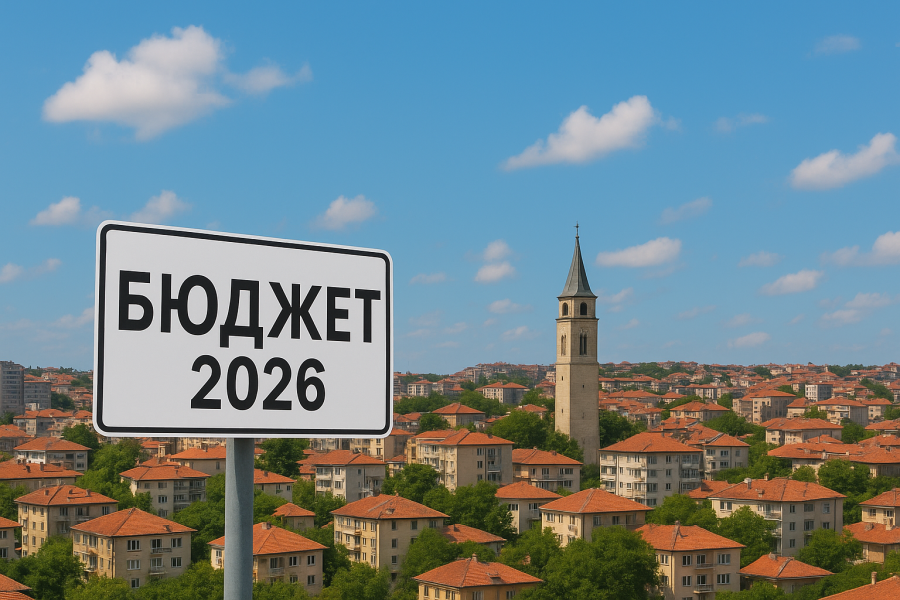
What lies ahead and what traces will the 2026 budget leave?
The Bulgarian real estate market is entering another wave of transformation – this time not driven by a construction boom or rising interest rates, but by a combination of a new tax policy and the draft budget for 2026, which reshuffles the financial expectations of households, investors and municipalities.
This change does not arrive with fanfare, but rather with the quiet yet distinct squeak of the administrative pencil: revising local taxes, updating tax assessments, stricter tax collection and increased property maintenance costs. For some this is an irritating tension, for others — further proof that the property market is no longer the easy and predictable terrain of the past.
What do the new rules actually mean? And where might the market head in the next 12–18 months?
How the new tax framework will shake the market
1. A year of "waiting"
The combination of higher local levies and updated assessments increases owners' costs. The first reaction is almost always the same: delay. Buyers postpone transactions while they orient themselves to what the new amounts mean, and sellers freeze waiting for the market to signal. In the short term this means smaller transaction volumes.
2. Rents will likely take the hit
When the owner pays more, the logical response is often to pass that burden onto the tenant. In strong cities — university towns, with developed economies or internal migration — rents may rise moderately, especially for quality properties and buildings with good features.
3. Investors become more selective
The investment property market is no longer a territory for improvisation. Increased costs and a stricter fiscal regime require more precise yield calculations. Short-term speculation loses some of its appeal; properties with proven rental potential, stable contracts and low vacancy come to the fore.
4. Construction enters a phase of sorting
New projects will likely be more carefully selected, especially residential ones. High financing and labor costs will cause some investors to wait or regroup. Well-positioned projects with good infrastructure prospects, however, will continue to be implemented steadily.
5. Strong local effect
One important element in the upcoming changes is that municipalities will have a wider framework to set part of the tax burden. This means: a highly divided market. Cities with moderate updates will retain interest, while others may experience a more pronounced outflow or stagnation.
Three scenarios that could shape 2026
Baseline scenario
Minor slowdown in growth, but without dramatic drops. A moderate reduction in transactions is expected, stable prices in major cities and more noticeable cooling in smaller ones.
Negative scenario
With a sharper and widespread increase in the tax burden, price declines are possible in vulnerable areas, greater supply of older apartments and price reductions in low-liquidity segments.
Positive scenario
If the updates are gradual and the budget stimulates infrastructure and investment, the market may remain stable and quality properties may continue to appreciate.
One-page forecast for the Haskovo real estate market (2025–2026)
Overall picture
Haskovo is a city with moderate demographics, stable ownership levels and relatively limited new construction. This makes it a market that reacts more slowly to economic and tax changes, but with greater sensitivity to costs.
What to expect?
1. Prices
- Light pressure toward stabilization or slight decline for older panel and brick apartments.
- New construction will hold its positions, but the rate of increase will be slower.
- In more preferred neighborhoods prices will likely remain almost unchanged.
2. Rents
Likely moderate increases, mostly for more central and renovated properties. Rental demand in Haskovo is relatively stable, with the reaction to higher costs transferring more slowly than in other cities.
3. Investment interest
- Haskovo is a city with a higher share of owner-occupiers, so speculative interest is limited.
- Investors will seek more secure properties with low maintenance costs.
- Commercial spaces may feel additional cooling unless they are in key locations.
4. Construction
New projects will be more selective, smaller and aimed at the middle class. A sharp increase in supply is unlikely, which preserves the relative balance.
5. Local factor
If the municipality imposes more moderate increases in local levies, Haskovo could be among the cities with a milder impact from the new tax framework.
Summary for Haskovo
The market will remain stable but cautious. Buyers will look for good deals and quality homes, while sellers will need to adapt to a more demanding environment. In the short term no major shocks are expected, but the market will be more rational and less prone to sharp movements.
© 2025 Intriga Real Estate Agency – Haskovo. All rights reserved. Text created exclusively for the agency’s website. Copying or using without written permission is prohibited.